UP TO 70% OFF Winter pricing is live · Winter pricing ends Sunday at midnight
Home · Energy · First Person
I Worked for the Power Company for 31 Years. Here's What They Don't Print on Your Bill — and the One Thing I Plug In Before Anything Else.
Your January bill is going to be the highest you've ever paid. That's not a prediction, it's arithmetic. But a good chunk of what you're paying for never does any work in your house — and there's a cheap way to stop feeding it.
FD
Frank D., Sheffield · Retired utility lineman Updated this week · 6 min read
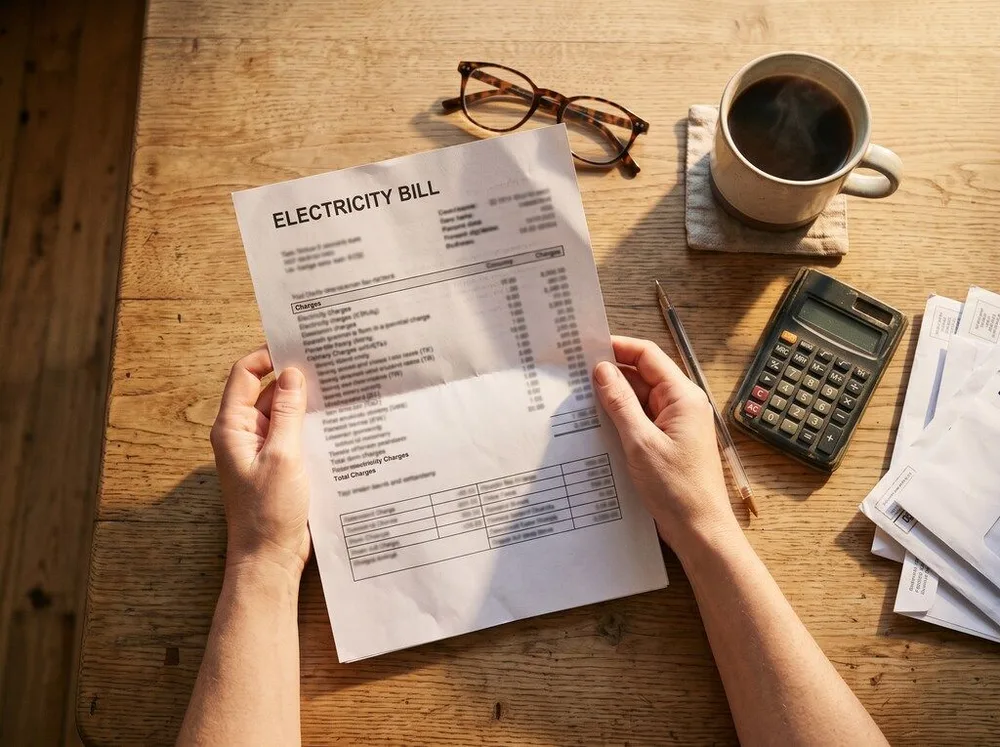
My neighbor's December bill. She asked me to explain it. I couldn't — and I used to work there.
I climbed poles and set transformers for a regional electricity company in the north of England from 1989 until I retired. I know how the grid works, I know how billing works, and I know what the company would rather you didn't think too hard about. So let me save you some time.
26p
per kilowatt-hour — a typical GB domestic unit rate under the Ofgem price cap. Standing charges sit on top, and winter use pushes the bill higher still.
Source: Ofgem price cap, domestic electricity unit rate
And that's before winter. Heat pumps, space heaters, the boiler pump, fairy lights, everyone home more. Rates up, usage up. That's why January hurts.
Three things the bill doesn't tell you
1
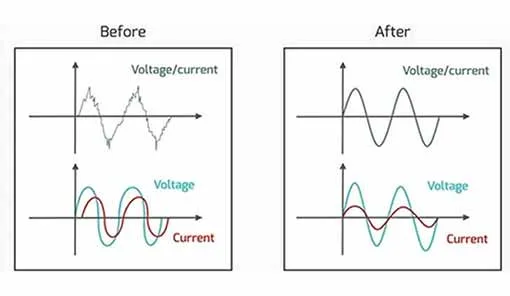
You're billed for power your appliances pull but don't use.Motors and compressors — your fridge, boiler pump, washer, tumble dryer, well pump — draw more current than the work they actually do, because the voltage and current in your wiring fall out of step. Engineers call it a poor power factor. The extra current heats your wires and gets counted by the meter either way. Utilities fix this on their own side of the grid with capacitor banks. On your side of the meter, nobody fixes anything.
2
Up to 10% of your bill is for things that are "off."TVs, game consoles, chargers, the microwave clock, the printer, the cable box — all drawing power around the clock. The Energy Saving Trust puts standby power at a noticeable slice of a typical home's electricity use. On a £160 bill, that's money every month for nothing.Energy Saving Trust, standby power guidance
3
The spikes are what kill your appliances.Every time a big motor kicks on, the voltage in your house dips and surges. Small stuff, hundreds of times a day. That's what cooks the control board in a £900 fridge in year six instead of year fifteen. The utility isn't liable for it, and your warranty is long gone.
"The utility fixes the power on their side of the meter. Your side is your problem. Most people don't know they have a side."
What I plugged in
Commercial buildings have had power-factor correction and surge suppression for decades — it's standard, it's boring, and it saves them a fortune. For a house, you never had an option that wasn't a £1,500 electrician's job.
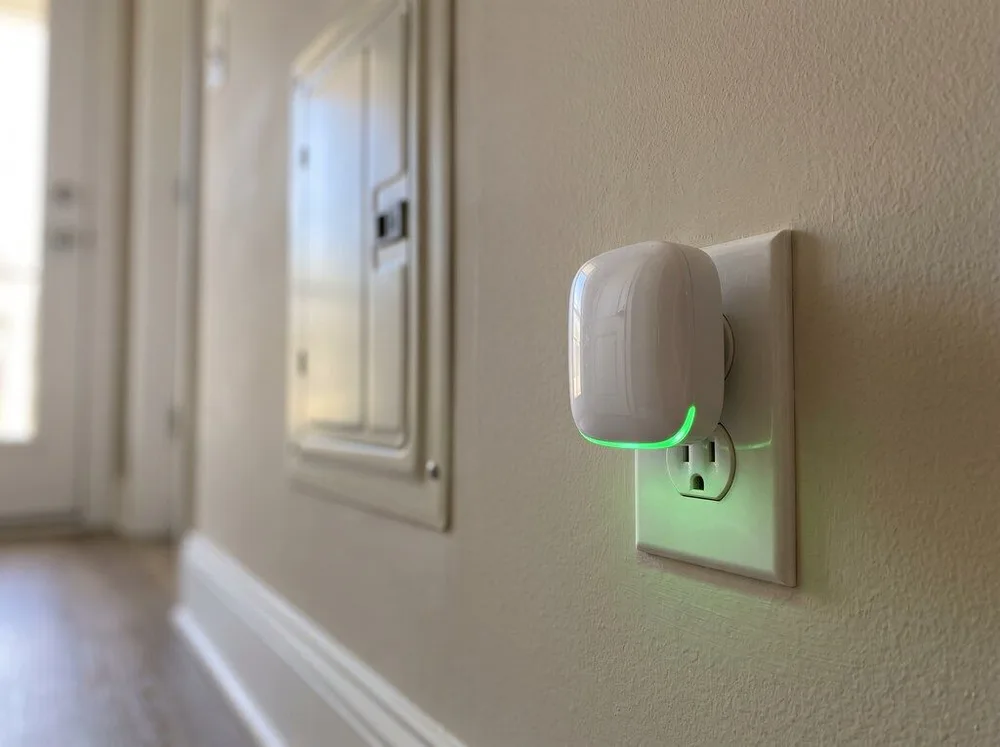
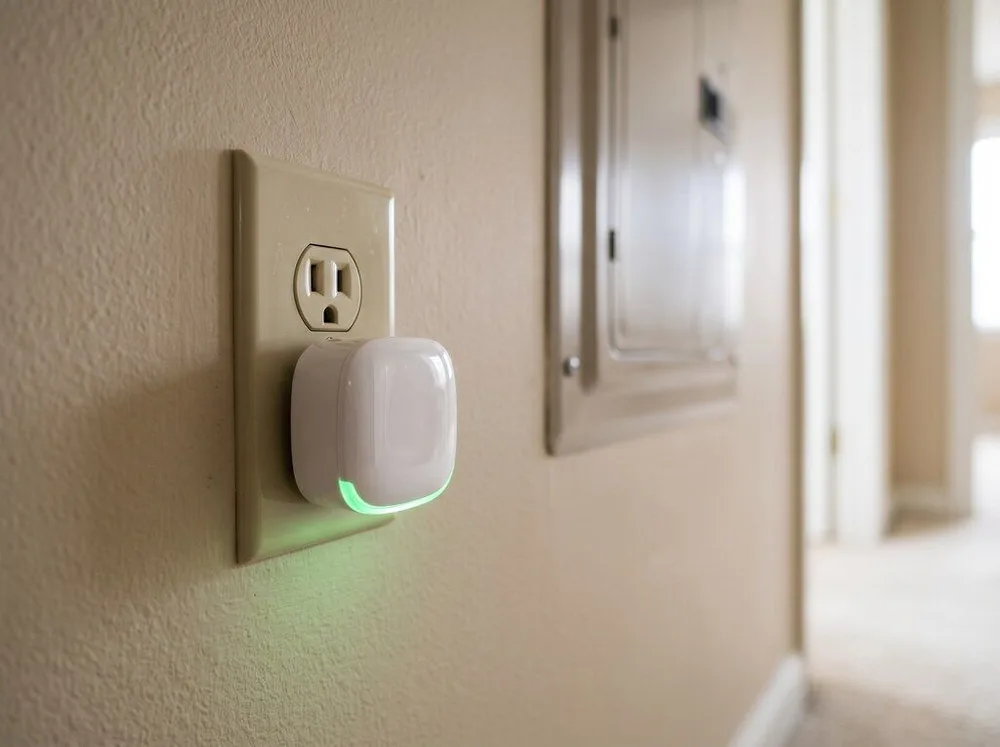
Then my son-in-law, who's an electrician, showed me a little white box called StopWatt. It plugs into any outlet. Inside is a capacitor bank and a surge filter — the same two things that commercial gear does, shrunk down and made for a 120V home circuit. It stabilizes the voltage on your wiring, smooths the spikes, and cuts the wasted current your motors pull. Green light on means it's working. That's the entire user manual.
Nearest socket to the consumer unit. Plug it in, forget about it.
★★★★★ 4.8 · 758 verified ratings · Sold out 3× this year
My own numbers
I'm a skeptic by trade. So I did what I'd tell anyone to do: I pulled twelve months of bills, plugged one unit in by the panel and one in the cellar by the boiler, and changed nothing else.
What the device is doing on your wiring: left is the "before" — current lagging voltage and full of noise. Right is corrected.
December 2024 (no StopWatt)£186.40
December 2025 (two units, same thermostat)£147.26
Difference−£39.14 / month (21%)
My bills, my house, a 195 m² house, gas boiler with an electric pump, and an electric immersion heater. Your results will vary — a house full of motors saves more, a flat with a gas hob saves less.
Twenty-one percent. Not the "up to 90%" the ads throw around — I'll be honest, that number is for a house with an ancient well pump and three old electric heaters — but £39 a month, every month, for a one-time purchase. The three-pack paid for itself in the first two billing cycles.
And the part I actually care about more: the lights don't flicker when the boiler fires up anymore. That flicker was the voltage dip that was eating my appliances.
What it is — and what it isn't
It's not a magnet, a sticker or a "chip." It's a capacitor bank and surge filter in a plastic shell. Real components, doing a real job.
It doesn't touch your meter. It works on your wiring, after the meter. There's nothing to tamper with and nothing illegal about it.
Draws almost nothing itself. Less than a nightlight.
Protects what's plugged in. Surge filtering across the whole circuit, not just one power strip.
No install, no electrician. Renters can use it. Take it with you when you move.
60 days to prove it. Two full billing cycles. If the number doesn't move, send it back for a refund.
How many do you need?
One per roughly 90 m², placed on different circuits. One next to the consumer unit, the next as far from it as you can get — the garage, the utility room, the far bedroom. Whole-house coverage is why the three-pack is the one everybody buys.
1 unitFlat or small house 75–110 m²
2 unitsMedium house 110–140 m²
3 unitsLarge house 140 m²+
What arrives. Fits in your palm, nothing to assemble.
Why your utility isn't telling you this
Think about who profits when your house wastes power. Not you. The utility bills every kilowatt-hour that passes the meter, useful or not, and in most states its rate case is literally built on how much you consume. There's no villain in a boardroom — it's just that nobody on the billing side has any reason to help you use less. Commercial customers figured that out decades ago and installed correction gear. Households were simply never offered the option.
Now it's a plug and a wall outlet.
What other people are seeing
4.8
★★★★★
758 customer ratings · 90% five stars
Melissa H.✓ Verified buyer
★★★★★
Made our money back in 4 months
I don't usually write reviews, but I have to share numbers. First month we saved £26. Second month, £35. Third month, £40. Fourth month, £42. If that isn't a strong testimonial, I'm not sure what is.
KH
Kevin H.✓ Verified buyer
★★★★★
Customers for life
I'm surprised by how much we saved… you literally plug them in and that's it. My wife was shocked when we got the first bill and we'd saved £28. It's only gotten better from there.
WB
Wilma B.✓ Verified buyer
★★★★★
Bought three. No-brainer.
One in the kitchen, one in the bedroom, one in the living room. After six months I can confidently say we're saving at least £40 a month. You want to save money each month? Buy a few of these and you're set.
TW
Tracy W.✓ Verified buyer
★★★★★
Not sure how it works, but the savings are real
If you're skeptical, I get it — I was too. I'm not entirely sure how it works, but the savings are REAL. Third bill in a row that's lower than last year's.
RG
Ray G.✓ Verified buyer
★★★★★
The flicker is gone
Honestly bought it for the surge protection — we're on a rural line and lose a fridge every few years to storms. Lights don't dip when the well pump runs anymore. Bill is down about 15% on top of that.
DP
Dana P.✓ Verified buyer
★★★★☆
Good, give it time
First bill was only a few pounds different and I almost returned it. Second bill was £30 lower. Support said to wait a full cycle and they were right. Four stars only because it took patience.
Where to get it
Commercial power-factor gear runs into the thousands. StopWatt sells direct, skips the retail markup, and is running winter pricing right now, with an extra 10% that comes off automatically at checkout. One December bill covers it.
Ready to order?
StopWatt sells direct through its official order page. Choose one, two or three units there depending on your home size — the per-unit price drops with the bundle, and the extra 10% is applied automatically at checkout.
You'll choose your package and see current pricing on the official order page.
Questions I get asked
Is this a scam? I've seen "energy saver" gadgets debunked.
You've seen stickers and magnets debunked, and rightly so. This is a capacitor bank and surge filter — the same category of hardware commercial buildings install, scaled to a home outlet. It won't do magic: on a home with few motors (gas heat, gas stove, no AC) the savings are modest. On a home full of compressors and pumps, they're real. That's exactly why there's a 60-day refund — compare two bills and decide.
Is it legal? Does it mess with the meter?
Completely legal. It plugs into an outlet on your side of the meter and never touches the utility's equipment. There's nothing to tamper with.
How fast will I see a difference?
Give it one full billing cycle — the first bill after you plug it in is usually partly from before. Most people see it on the second bill. Compare against the same month last year, not the previous month, because seasons change your usage.
Where do I plug it in?
The outlet closest to your breaker panel. With two or three units, spread them across the house on different circuits — far bedroom, garage, laundry room — so every circuit is covered.
Does it use electricity itself?
A fraction of a watt — less than a nightlight. The green LED is most of it.
Will it work in an apartment or a rental?
Yes. No installation, no wiring, nothing your landlord needs to know about. Unplug it and take it with you.
Is it safe? Any fire risk?
It's a sealed, fused unit with no moving parts and no heating element, and it includes surge filtering that protects what's plugged in with it. Like any plug-in device, use it in a dry location and don't cover it.
How long does shipping take?
Orders ship from a UK warehouse within 24 hours on business days and typically arrive in 2–5 working days with tracking.
The bottom line
Rates are going up again in January. You can't change the rate. You can change how much of what you pay for actually does work in your house — and for the first time, that's a plug in a wall outlet instead of a £1,500 electrician's visit.
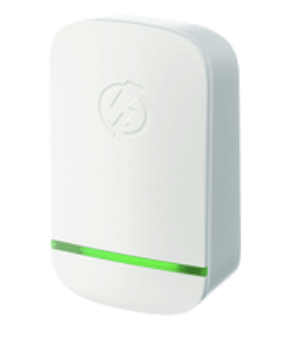 1 unit
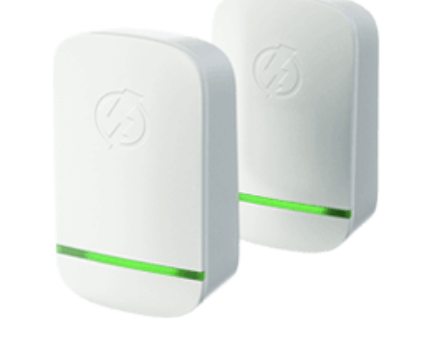 2 units
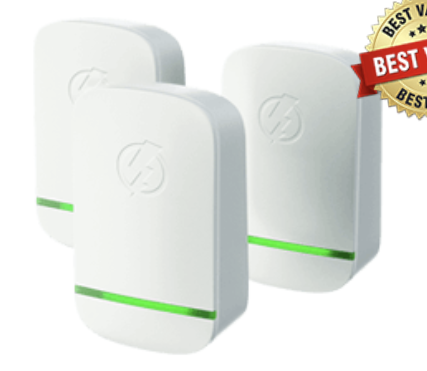 3 units